Raymond Williams Country And The City Pdf Reader
Posted By admin On 29.07.19Goodreads helps you keep track of books you want to read.
- In The Country and the City Williams explores the images of the rural and urban worlds in English literature since the 16th century and shows how certain ones have persisted while others have changed. His literary examples and observations tend to support his historical interpretation: that there has been no.
- Country and City. The city is a cultural phenomenon. Amongst other things, it generates identity and articulates identification. Today, however, the sources through which such identity is mediated are unclear. Donatella Mazzoleni argues, as most notably has Raymond Williams in The Country and the City, that up until the.
Williams' *The Country and the City* is a classic study on the relationship between literature and society. His arguments are original and interesting, and formulate useful, if not necessary reading for later marxist criticisms. Some parts of the book are taken from one of Williams' earlier books entitled *The English Novel From.
Start by marking “The Country and the City” as Want to Read:
Rate this book
See a Problem?
We’d love your help. Let us know what’s wrong with this preview of The Country and the City by Raymond Williams.
Not the book you’re looking for?Preview — The Country and the City by Raymond Williams
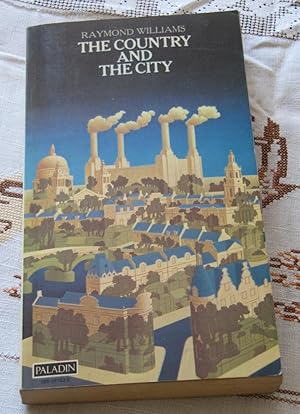
As a brilliant survey of English literature in terms of changing attitudes towards country and city, Williams' highly-acclaimed study reveals the shifting images and associations between these two traditional poles of life throughout the major developmental periods of English culture.
Raymond Williams Country And The City Pdf Readers
Published March 27th 1975 by Oxford University Press, USA (first published 1973)
To see what your friends thought of this book,please sign up.
To ask other readers questions aboutThe Country and the City,please sign up.
Be the first to ask a question about The Country and the City
This book is not yet featured on Listopia.Add this book to your favorite list »
Rating details
'ALL I KNOW IS I HAD A COW AND PARLIAMENT TOOK IT AWAY FROM ME' - A COUNTRYMAN SPEAKING OF ENCLOSURE
It was with a little trepidation that I began to read the Marxist critic Raymond Williams 35 year old book 'The Country And The City'. I need not have been worried.
Its obvious that Williams, who was born in a Welsh border village, has a keen knowledge of the reality of countryside grounded in experience. He has usefully augmented this and expanded into other times and places during a life time of...more
It was with a little trepidation that I began to read the Marxist critic Raymond Williams 35 year old book 'The Country And The City'. I need not have been worried.
Its obvious that Williams, who was born in a Welsh border village, has a keen knowledge of the reality of countryside grounded in experience. He has usefully augmented this and expanded into other times and places during a life time of...more
Dec 02, 2009Justin Evans rated it really liked it
A great mix of literary criticism - his readings of G. Eliot and Dickens are particularly impressive - history and political agitation. Williams starts with a discussion of the pastoral mode, which is valuable in itself. But the book really gets humming when he hits the early moderns, and starts to track the different ways that pastoral themes have been used and abused by people in different times and classes. This is in the middle portion of the book. The last few chapters finally started to ge...more
Everything that great scholarship should be. The first chapter involves an escalator, and is worth the price alone, and while some of the succeeding sections can be a little dry (I had a hard time caring about pastoral poetry), Williams always manages to make powerful points and keep the reader reading. The book makes a powerful case that the Urban-Rural spatial-relationship actively structures our lives in ways we don't often recognize, let alone comprehend. Call it a literary history of space.
A particularly relevant book in the era of the Trump presidency. Williams argues effectively that 'country' and 'city' are not fixed archetypes so much as social constructs whose development is directly related to the growth of capitalism as a dominant economic mode. Cities are seen today as the bastions of capitalism. But Williams argues that capitalism was first developed and mastered in the country beginning among the aristocratic landowning class of the 16th century. The city was inextricabl...more
Mar 21, 2017Hannah rated it really liked it
Read this for prelims.
It's a book of criticism that mostly focuses on the 18th and 19th centuries in England. Does touch earlier, and spends a fair amount of time in the 20th century. As far as criticism goes, it was a pleasant read.
It's a book of criticism that mostly focuses on the 18th and 19th centuries in England. Does touch earlier, and spends a fair amount of time in the 20th century. As far as criticism goes, it was a pleasant read.
alteration of landscape, alteration of seeing. inclusion of labor, inclusion of work, and of working men/women (87)
There is so much here. a dialectical imagination perhaps at its finest expression. The longstanding imagery and associations are explored...
It's concerned with British history and literary criticism but its applications could be much wider as a way of seeing developmental relationships between country and city. This concerns concepts of Nature, landscape, and structures of feeling
There is so much here. a dialectical imagination perhaps at its finest expression. The longstanding imagery and associations are explored...
It's concerned with British history and literary criticism but its applications could be much wider as a way of seeing developmental relationships between country and city. This concerns concepts of Nature, landscape, and structures of feeling
May 10, 2015Mara Eastern rated it it was amazing · review of another edition
Perhaps the most essential publication on the representation of the city and the country in classic English literature. The author interweaves the literary and the historical, the public and the private, the theory and the practice. Written with passion for the subject and compassion for humanity.
Apr 03, 2014Michael Meeuwis rated it it was amazing
Massive, persuasive, astonishing. A history of the figures of country and city in English literature, starting with the seventeenth century; likely to change how one reads everything from the Cavalier poets to science fiction of the 1960s.
Astute formulation of the translation of the pastoral into Modernity. Readable and believable, even after fifty years.
Sep 11, 2018Emma rated it really liked it · review of another edition
An engaging Marxist critique of mostly eighteenth and nineteenth century literature concerning the countryside and the emerging cities. Despite its age it doesn’t feel dated, although I would have enjoyed criticism of more female writers beyond primarily Austen and George Eliot. Although Williams speaks of the city as an inevitable product of capitalism, he doesn’t go on to demonise city life which I found quite refreshing, as that kind of reading of the city feels lazy. For a hefty 400 page cri...more
An effective and even virtuosic application of Marxist cultural analysis. Williams scrutinizes a privileged tradition of representing country and city alike in English literature. He's interested in the images of the country and the city that dominate our cultural imagination. Many of these--from the country-house poems of Early Modern England, where fish jump cheerfully into nets and stags offer themselves up with perverse altruism, to the sentimental idealizations of pastoral verse--gloss over...more
This book reminds me of updating my narratives on grassland management.
Simply put, a great book and a great exercise of criticism
May 29, 2017Ashley Collins rated it it was ok
Not badly written, offers good information - I just didn't care and would have never chosen to read this if not for school.
Dec 14, 2018Alfredo Bojórquez rated it it was amazing · review of another edition
Una gran lector, los capítulos sobre H.G. Wells y William Morris son muy hermosos. De los lectores más atentos y sensibles de la crítica literaria marxista.
Oct 14, 2015Peter rated it it was amazing Shelves: british-history, 1970s, 19th-century, cultural-history, history, criticism, welsh-writers, social-history, broad-left
The great British social historians of the mid-twentieth century were almost obnoxiously overachieving. Raymond Williams may not have had the star power in history that his peers Eric Hobsbawm and EP Thompson had, but he shared their multifaceted intellectual productivity (he was a novelist on top of being a historian, critic, and activist- I wonder if his novels are any good). And I'd say he actually mastered and interwove two fields -- history and criticism -- in a way that the others mastered...more
The most interesting thing Williams presents is the durability of the rosy past, a thesis that he hammers home in the first few chapters that look at early modern England. The rest of the book shows the smaller changes that occur in English literature through the subsequent centuries, ending at about H.G. Wells. I admit that after on hundred and fifty pages the work grew tedious for me. This was largely because the structure of the book eluded me. Where was it going, besides forward in time? One...more
Wide-reaching, compelling, and endearing. 'At every point we need to put these ideas [of the country and of the city] to the historical realities, at times to be confirmed, at times denied. But also, as we see the whole process, we need to put the historical realities to the ideas, for at times these express, not only in disguise and displacement but in effective mediation or in offered and sometimes effective transcendence, human interests and purposes for which there is no other immediately av...more
Nov 17, 2013Laura Taylor rated it really liked it
Must-read for those interested in the landscape beyond the city and those wondering about why we urban folks fetishize the country. If you live in the country and work downtown, check this out. Williams is a great literary critic but this book is best known for its influence on social and critical geography.
His overview of English literature reflecting shifting attitudes about the countryside and the city is very enlightening. His Marxist take on changing social relationships framed by industry and the reorganization of labor and space is instructive. This book is a real classic but it's not always easy to process without a firm knowledge of the literature (e.g. the English literary canon).
Jan 19, 2017Matěj Bregant rated it really liked it
This book is a great opening to the whole theoretical distinction of country and city in Britain. It helps that it is well written without endless footnotes and explanatory paragraphs - Williams instead opts to illustrate his assertions of textual evidence, that is poetry and prose. It is definitely one of the better scholarly books on cultural theory I've had the pleasure to read.
Nov 29, 2012Julio César rated it really liked it · review of another edition
Un excelente análisis sobre la transformación de la Inglaterra rural hacia el capitalismo agrario, a través de su literatura. Wililams aplica sus conceptos tempranos, como el de 'estructura de sentimiento', al análisis literario para mostrar hasta qué punto es útil para mirar la cultura.
Jan 14, 2016Caitriona rated it it was ok · review of another edition
For some reason Goodreads is saying that this book was 15 pages long...I can assure you it was much more than that
Jul 30, 2009Jessica rated it really liked it
I dig Raymond Williams anyway, and I really enjoyed this work, particularly the chapter 'Three Around Farnham.'
Feb 26, 2007Blair rated it it was amazing
This book is so good. Read it. Read it read it. And then go listen to lo-fi city folk music or Alan Lomax.
May 21, 2014 auria marked it as to-read · review of another edition
Great resource. Some of the links made by Williams seem really fresh, though he's writing about lit from the 1700s on up.
The academic book I wish I'd written.
There are no discussion topics on this book yet.Be the first to start one »
Recommend ItStatsRecent Status Updates
See similar books…
See top shelves…
130followers
Raymond Henry Williams was a Welsh academic, novelist, and critic. He taught for many years and the Professor of Drama at the University of Cambridge. He was an influential figure within the New Left and in wider culture. His writings on politics, culture, the mass media and literature are a significant contribution to the Marxist critique of culture and the arts. His work laid the foundations for...more
“From the late eighteenth century onwards, it is no longer from the practice of community but from being a wanderer that the instinct of fellow-feeling is derived. Thus an essential isolation and silence and loneliness become the carriers of nature and community against the rigours, the cold abstinence, the selfish ease of ordinary society.” — 6 likes
More quotes…